
Most people never think about what happens when they switch from a live soccer match to a roulette table inside the same app. They tap once, and the screen changes. It feels ordinary. Quick. Clean. What sits behind that small movement, though, is a web of systems working together, so the shift does not feel like leaving one product and entering another.
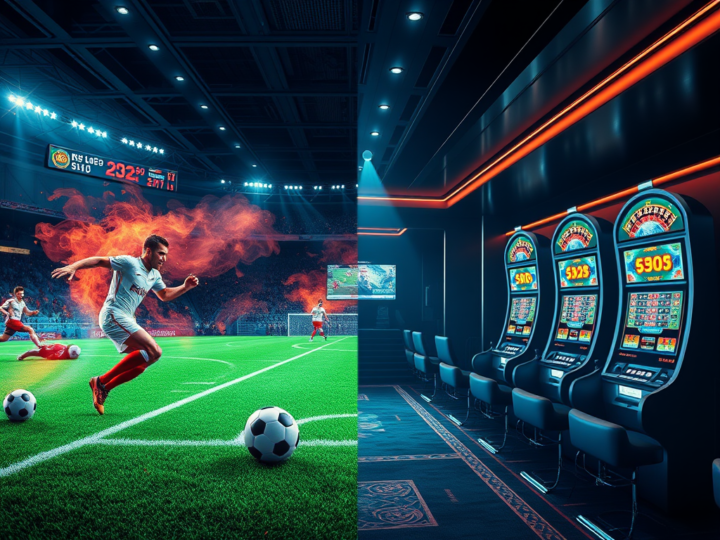
Sports environments run in constant motion. Odds update as the match unfolds. Statistics refresh. Timers tick down. Casino games operate differently. They depend on contained game engines, structured payout logic, and controlled animation loops. On paper, those systems do not naturally belong together. Yet, in strong platforms, they appear to flow as if they were always part of the same design.
The complexity shows itself in how session control is handled. Sports engines and casino engines often speak different internal languages, but the user cannot be allowed to notice that difference. Platforms such as Betway MZ illustrate this balance through unified account layers that keep authentication, balances, and activity synchronized across environments without interruption. When someone leaves a live betting screen and opens a slot or table game, there is no visible reset, no repeated login, no mismatch in displayed funds. That smoothness depends on shared infrastructure sitting quietly beneath both sections.
Building Without Breaking Continuity
One reason these transitions feel natural is modular architecture. Instead of constructing a single massive system, developers divide responsibilities into smaller services. Authentication runs separately from odds processing. Casino sessions are isolated from live data feeds. These components communicate constantly, passing information back and forth so the overall experience feels cohesive.
When the structure is built properly, shifting from a live sports page to casino games does not force the platform to restart or rebuild itself in the background. Nothing dramatic happens. The system simply adjusts, bringing forward what you need while the rest keeps running without interruption. From the outside it feels smooth and unforced, more like turning a corner inside the same space than closing one door and opening another somewhere else entirely.
Latency Is the Silent Risk
Transitions also depend heavily on timing. Live sports markets are sensitive to seconds. Odds cannot freeze while a new screen loads. Casino games require fluid rendering so animations and interactions respond instantly. If there is even a small hesitation, the illusion of continuity cracks.
To avoid that, systems rely on caching, background processing, and selective loading of assets. Instead of rebuilding the interface from scratch, the Betway platform, for instance, refreshes only what is necessary. Data layers continue running underneath, maintaining state so the user experience remains uninterrupted.
When Engineering Disappears
The most successful transitions are the ones nobody notices. Users move between sports and casino games without pausing to think about architecture or infrastructure. They simply act.
That invisibility is the real achievement. It means session control, modular services, synchronization, and latency management are aligned well enough to fade into the background. When that happens, the platform no longer feels divided into sections. It feels like a single environment, even though multiple systems are working at once to keep it that way.